


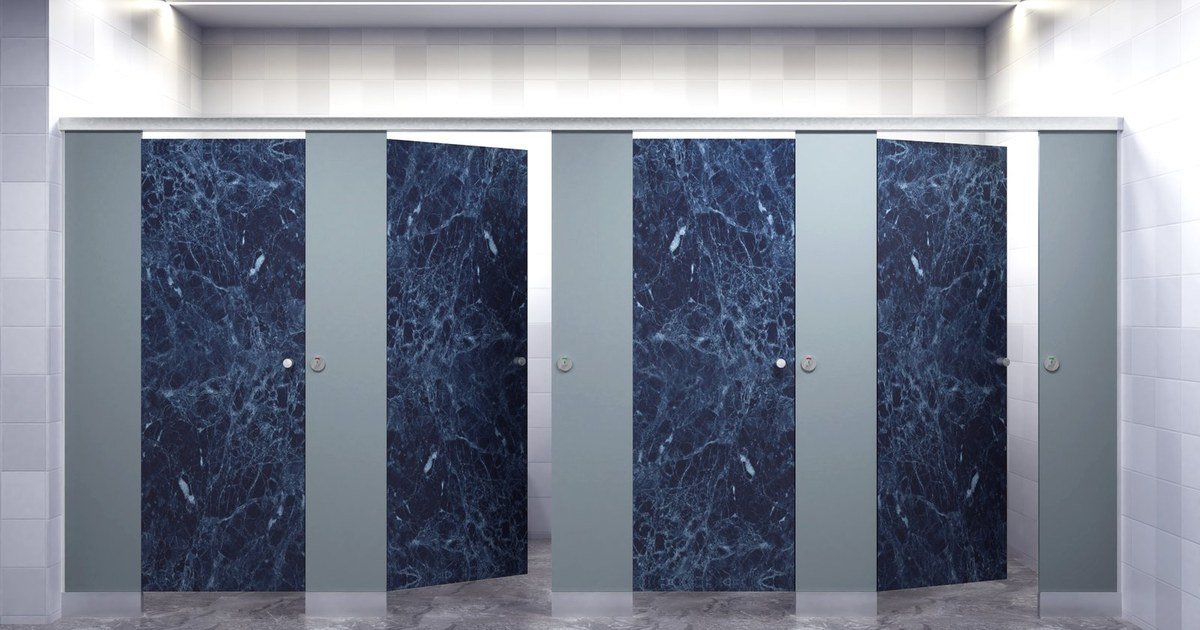
HPL toilet cubicles have become the standard choice for commercial washrooms in schools, offices, hospitals and malls. The reason is simple and practical. Washrooms are wet, busy and cleaned every day, and few materials cope with all three for years. This guide explains what compact laminate is, the properties that matter in a washroom, how it compares with board based partitions and what to check on a sample before you approve it for your project.
Key Takeaways
- HPL toilet cubicles use solid compact laminate, a dense phenolic resin core that resists water, impact and scratches.
- Compact laminate toilet cubicles suit wet, high traffic washrooms better than board based partitions, which can swell if water gets in.
- Check density, thickness, edge finish and the laminate data sheet on a real sample before approval.
What HPL Toilet Cubicles Are Made Of
HPL stands for high pressure laminate. In cubicles it means a solid compact panel, not a thin decorative sheet on a board.
High pressure laminate is made by pressing layers of resin impregnated paper at high pressure and temperature. Compact grade laminate is built up thick enough to stand on its own as a panel. The Super Creations specification describes solid grade compact laminate made of phenolic resins under high pressure and temperature, with a density above 1,400 kg per cubic metre.
The DEBO India page adds that the compact board is made of cellulose fibres derived from paper. The result is a dense panel that is the same material all the way through. There is no wood core to swell and no facing sheet to peel.
This is the main difference from the basic cubicle types described in our guide to what toilet cubicles are. That article introduces cubicles in general. This one focuses on why the panel material itself matters so much. Standard HPL toilet cubicles in the Super Creations range use 12 mm panels for doors, pilasters and dividers.
Because the panel is solid, it can be machined like a hard sheet. Edges are cut clean and chamfered, holes for hinges and locks are drilled precisely, and shapes can be cut on CNC machines. That is how the Super Kids and Star Kids series get their curves, waves and slopes for children’s washrooms while still using the same tough material.
Five Properties That Matter in a Washroom
Washrooms test materials hard. Compact laminate toilet cubicles are chosen because they handle the five conditions that wear partitions out.
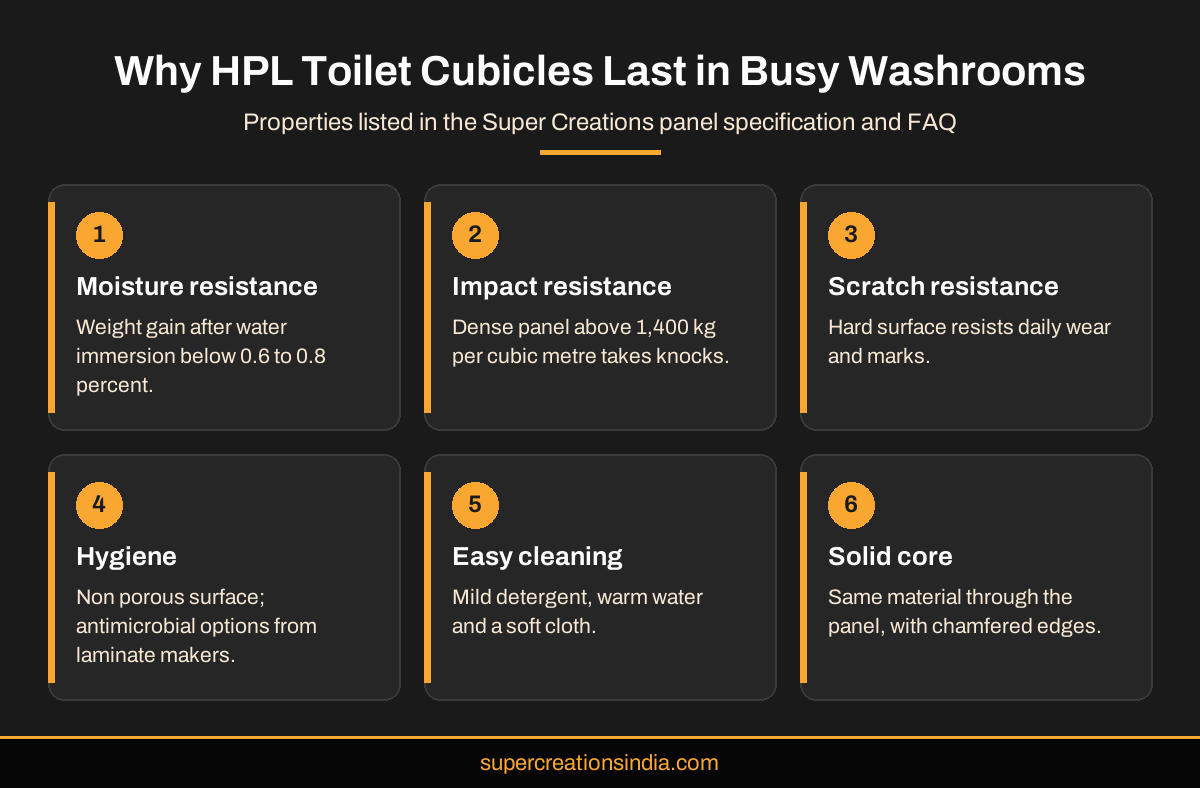
Moisture comes first. Floors are mopped daily and showers add steam. The Super Creations specification limits weight gain after water immersion to below 0.6 to 0.8 percent. The DEBO India page describes the material as moisture resistant for restrooms’ constant humidity.
Impact and scratches come next. Doors are slammed and bags knock against panels. The published panel clause lists resistance to heat, bacteria, chemicals, scratches and impact. Hygiene is the fourth property. A dense, non porous surface is easy to wipe clean, and the Super Creations FAQ notes that antimicrobial surface options are offered by many premium laminate makers.
Easy cleaning completes the list. The FAQ recommends mild detergent, warm water and a soft cloth, with no harsh chemicals or abrasive pads. With that routine, HPL toilet partitions keep their colour and finish for years.
Fire performance is a related question for many projects. The Super Creations panel clause refers to the BS 476 fire retardant standard. Fire behaviour is a property of the specific laminate and thickness, so ask the supplier for the panel maker’s test report rather than relying on a general statement. Keep that report with your project records for inspections.
How Compact Laminate Compares With Board Based Partitions
Many low cost partitions use a wood based board with a thin laminate face. In a dry office that may be enough. In a wet washroom it is a risk.
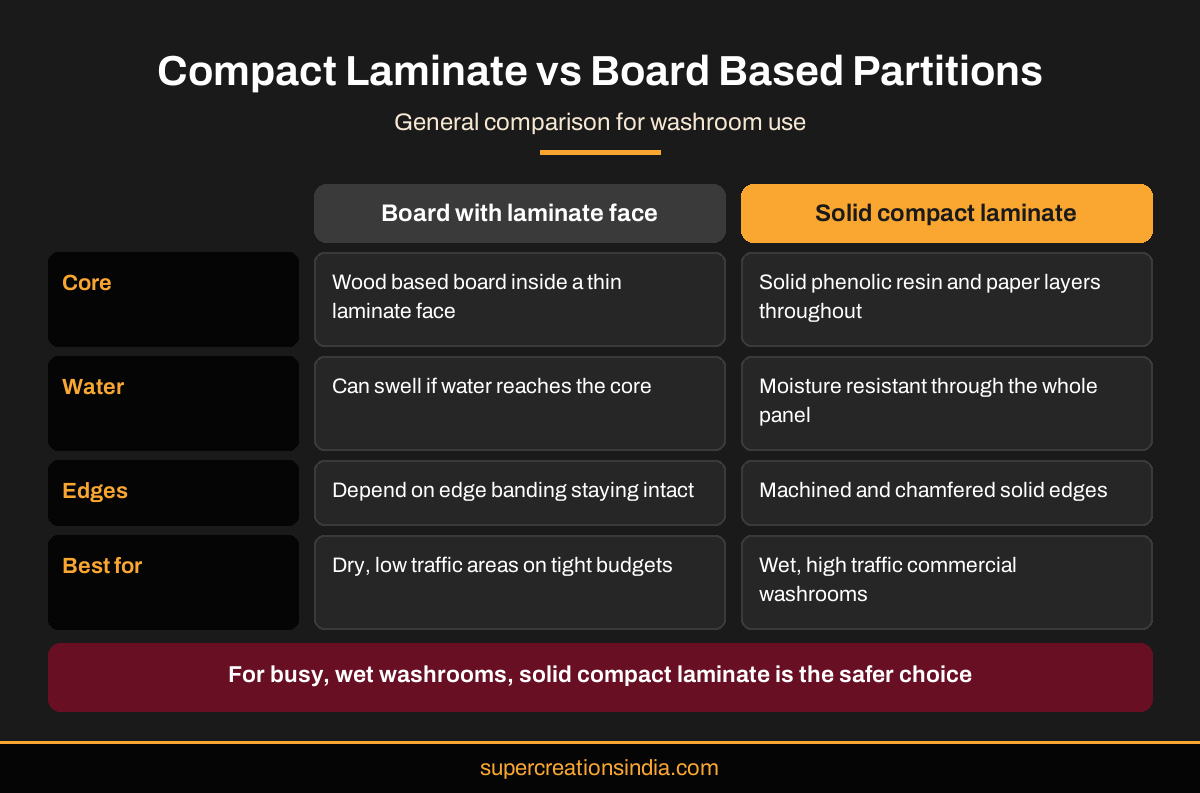
Board based panels depend on their facing and edge banding to keep water out. If an edge is chipped or a joint opens, water can reach the core and the panel may swell. Compact laminate toilet cubicles avoid this, because the panel is solid laminate with no separate core. Edges can be machined and chamfered, as the Super Creations specification requires for all visible edges.
The trade off is cost. Compact laminate toilet cubicles cost more than board at purchase. In a busy washroom, though, longer life and lower repair needs usually make HPL toilet cubicles the better value. The Super Creations FAQ names compact laminate as the most recommended material for high traffic sites such as malls, schools and airports, and notes that stainless steel partitions also suit long term, high use facilities.
Weight is the other practical difference. Dense compact laminate panels are heavier than board, so the frame, legs and hinges must be strong enough to carry them. This is why HPL toilet cubicles are sold as complete systems with matched hardware, rather than as loose panels fitted to any frame.
What to Check on a Sample and in the Specification
Before you approve HPL toilet cubicles, handle a real sample and read the data behind it.
Look at the edge first. A solid compact panel shows the same dense core right through. Check the thickness against the drawing, usually 12 mm for standard series. Ask for the laminate data sheet and confirm the density and water absorption values. Request test reports for the standards quoted in the specification, such as IS 2046, EN 438 and the BS 476 fire standard.
Then look at the system around HPL toilet partitions. The Smart Series pairs compact laminate with an anodised aluminium frame and stainless steel fittings. Real projects show the result: the HPL toilet cubicles at Narayana College were 36 Smart Series cubicles chosen for moisture resistance and durability in a high traffic student washroom.
Finally, check how the supplier will protect panels during delivery and installation. Compact laminate faces are tough in use, but stacking panels face to face without protection can still mark them. A careful supplier delivers panels wrapped and fixes them only after other trades have finished.
Where HPL Toilet Cubicles Work Best
Compact laminate toilet cubicles suit almost any commercial washroom, but some settings benefit most from their strengths.
Schools and colleges are a clear example. Children and students use washrooms heavily and not always gently. At The Celestiia School in Hyderabad, 21 moisture resistant HPL toilet cubicles from the Smart Series went into senior washrooms, with 8 colourful Excel Box Up cubicles for juniors and colour coded doors for boys, girls and general use.
Hospitals and pharmaceutical plants choose HPL toilet partitions for hygiene and frequent cleaning. Offices and IT parks want a premium look that stays smart for years. Malls, airports and public buildings need panels that survive very high footfall and occasional misuse. Showers and change rooms need moisture resistance above all, which is why box up series with closed bottom sections are often chosen there.
In each case, HPL toilet cubicles give the same core benefits: a solid, water resistant panel, a hygienic surface and a long service life. The choice of series and hardware then tunes the system to the budget and look of each washroom.
If you are unsure which series suits a particular washroom, share the type of users, expected footfall and budget with the supplier. A clear brief lets them recommend the right panel, hardware grade and layout, instead of offering one product for every room in the building.
Conclusion
HPL toilet cubicles suit commercial washrooms because solid compact laminate resists moisture, impact and scratches and is easy to clean. Compared with board based partitions, it has no core to swell and no facing to peel. Before approval, check density, thickness, edges and test reports on a real sample. Super Creations installs compact laminate cubicles across 14 series in more than 300 shades. Request a quote to discuss the right panel and series for your washroom.